3D-printed R/C planes and jets
A lot of what comes off the printers here ends up in the air: airframes, fins, nose cones, mounts and the small parts that keep a model flying after a hard landing.
Why R/C aircraft and 3D printing go together
Radio-controlled aircraft are a natural match for FDM printing. Models are light, shapes are curved and complicated, and the parts that fail are the ones that stick out: noses, fins, wing tips, landing gear mounts and control horns. Traditionally a builder would carve foam, laminate balsa or order a moulded part from a distant supplier. With a printer, a damaged part can be reprinted in hours from the same file, and a new design can be test-flown after a weekend of printing.
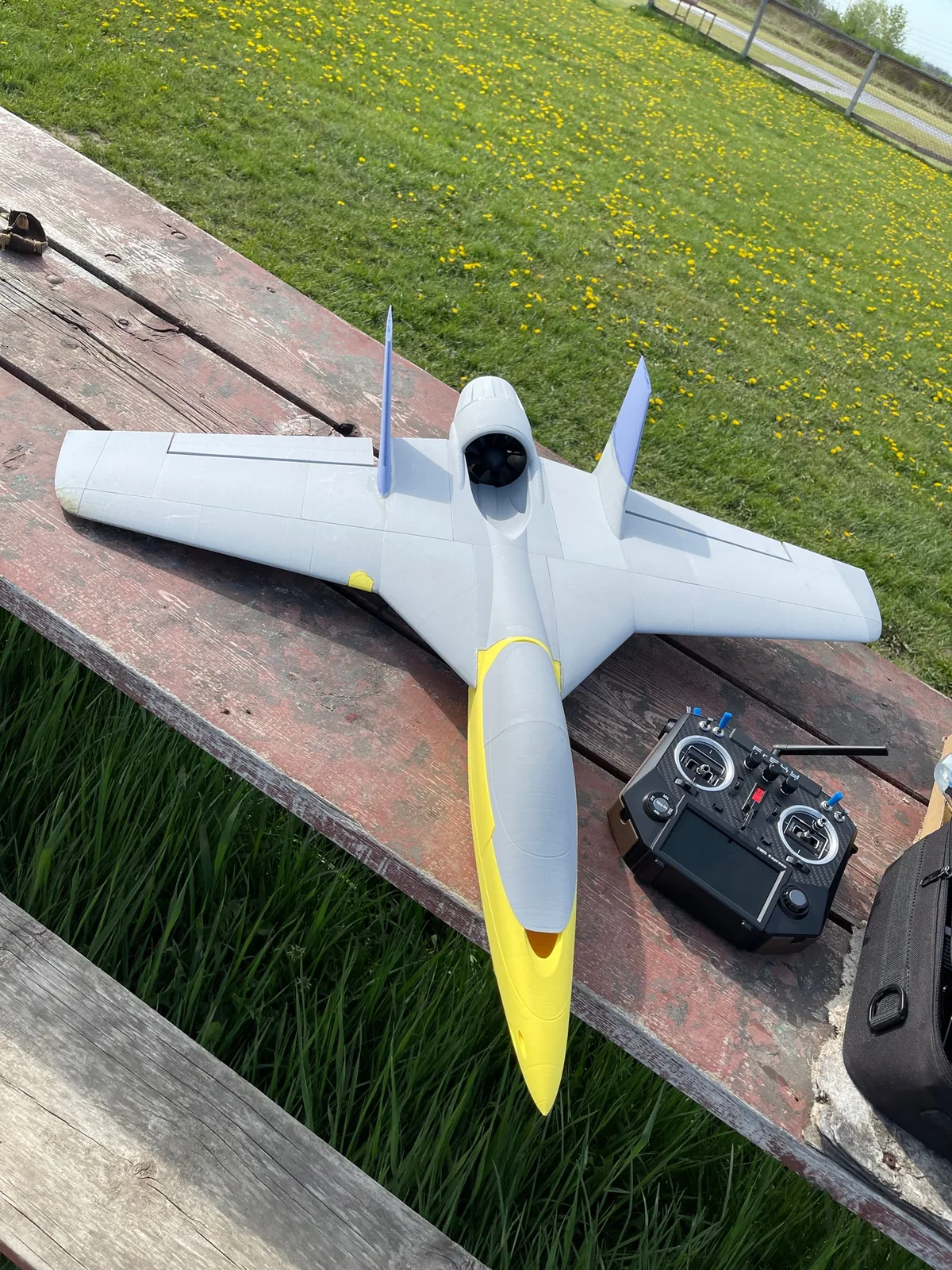
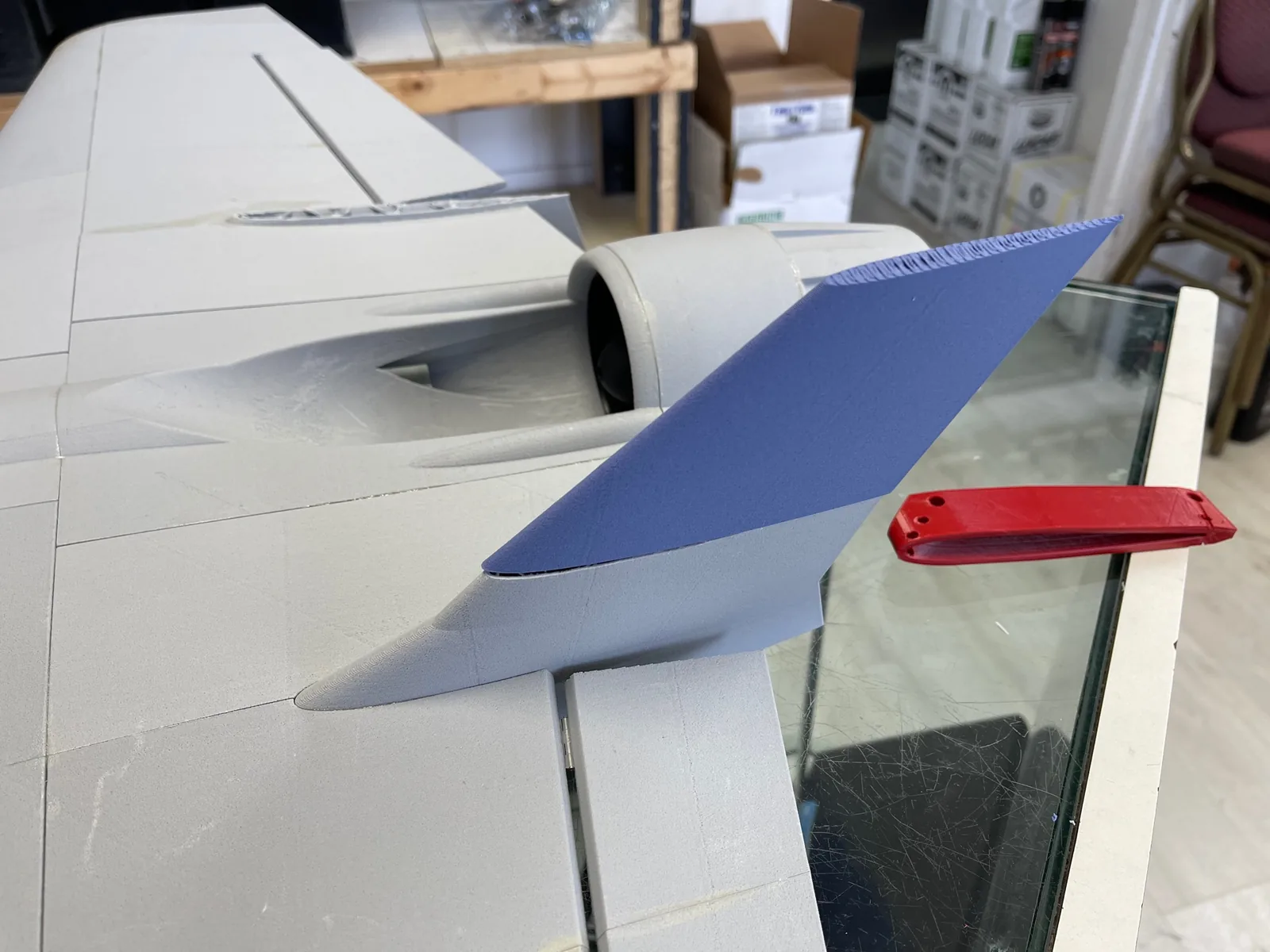
Corsair Custom 3D prints a lot of R/C planes and jets, both for the shop's own hobby interest and for builders who need parts. The work spans entire printed airframes built from sections, individual replacements for crash damage, and custom pieces for conversions. Everything is printed in FDM and guaranteed, so a part that does not fit or fails because of the printing is made right.
The kinds of parts that get printed
Aircraft parts fall into a few families, and each has its own demands on material and design.
- Fuselage and wing sections: large airframes are split into sections that glue together with alignment features. Hollow, ribbed structures keep weight low while giving shape accuracy that foam rarely matches.
- Fins, stabilisers and wing tips: thin surfaces that take knocks. These are printed with orientation chosen so that layers run along the part, improving stiffness against bending.
- Nose cones and canopies: curved shells where surface quality matters. Fine layer heights and careful seam placement help, and a coat of paint hides the rest.
- Motor and servo mounts: small, strong brackets that must hold a precise position. These get extra walls and sometimes a tougher plastic.
- Control horns, hinges and linkages: tiny parts under repeated load, printed so the layers do not peel apart at the pivot.
- Ducting and intakes for ducted-fan jets: smooth, round passages that guide air to the fan. Heat near the motor affects the plastic choice.
- Landing gear mounts and wheel pods: parts that absorb shocks, where flexible TPU or tough PETG can outlast brittle material.
Hollow printed structures: light but strong
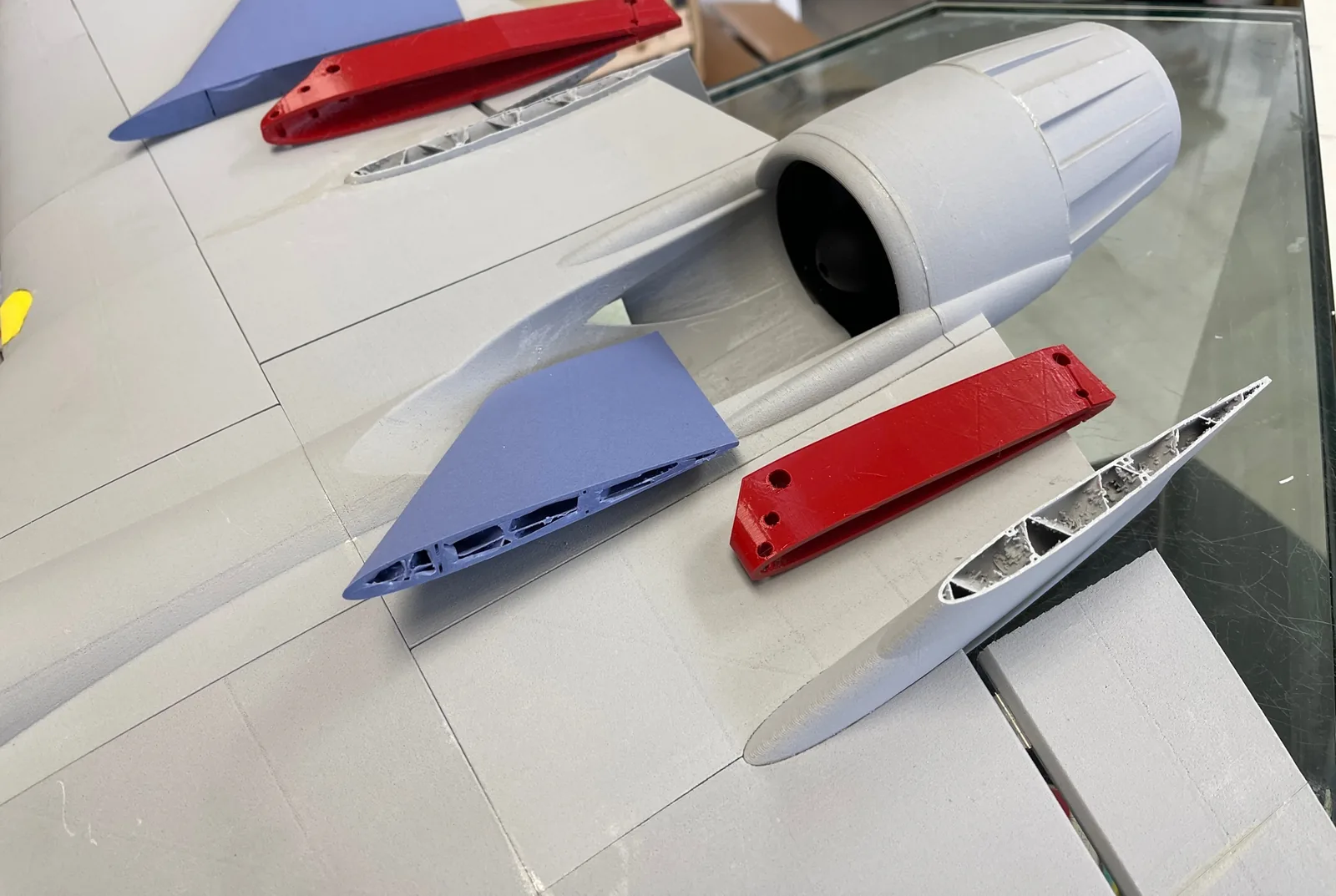
Weight is the main enemy of an R/C model. A heavy part needs more motor power, flies faster, and lands harder. Printed aircraft structures therefore use thin outer skins supported by internal ribs and webs, rather than solid plastic. The cut-away wing section below shows what this looks like in practice: a streamlined airfoil shell, with a series of internal ribs that hold the shape and carry load, and enough open space to keep mass low. The slicer builds those ribs as part of the model, so strength is designed in rather than added afterwards.
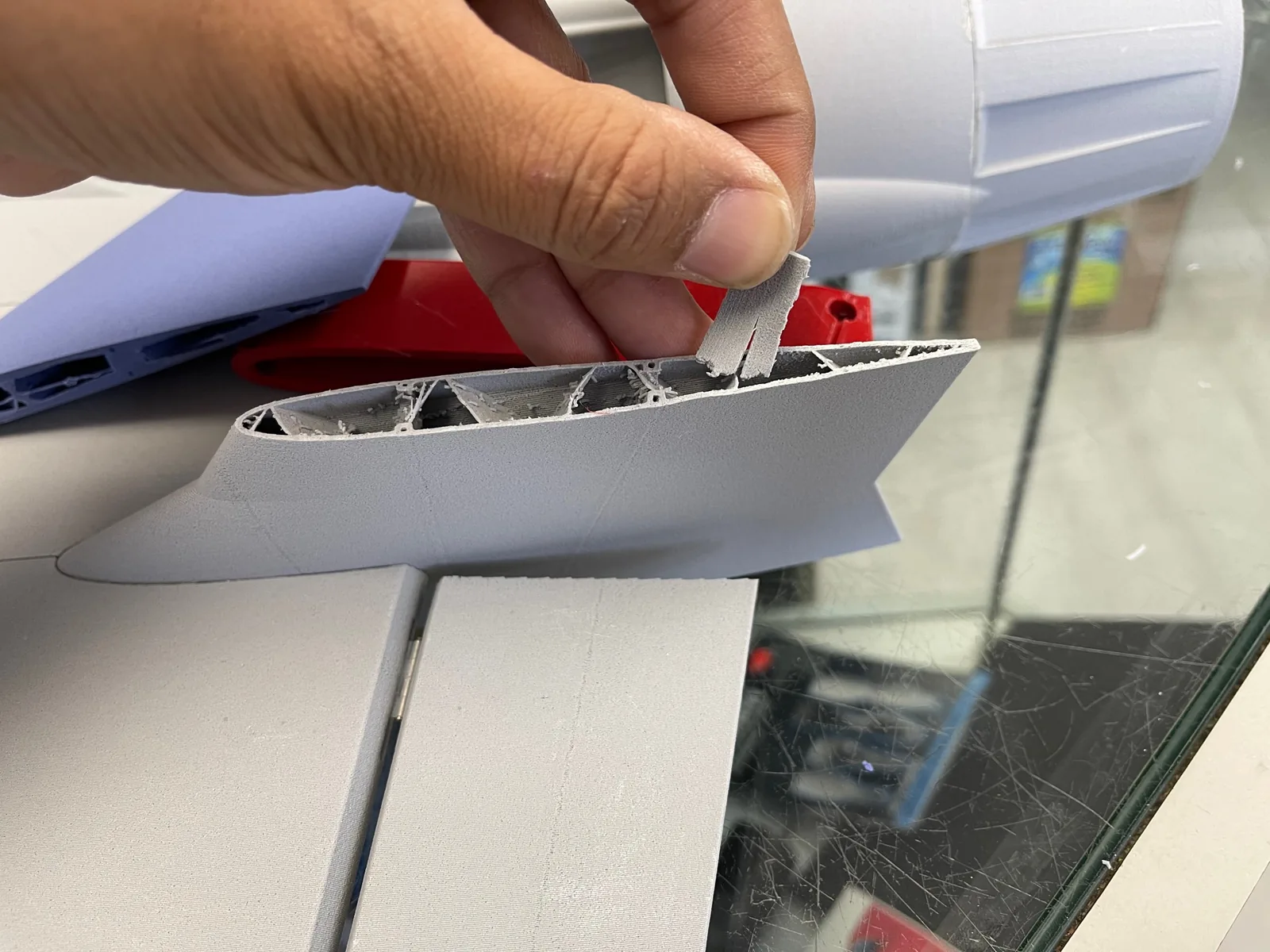
Designers also place structural features carefully. A carbon or wooden spar can pass through printed ribs, a wing joiner can be captured in a printed pocket, and hardware like servo trays can be integrated into the structure. The goal is to have fewer separate parts to fit and glue, with each piece printed in the strongest orientation.
Materials for the air
PLA prints cleanly and accurately and is a common choice for airframe skins, especially when the aircraft will not sit in a hot car. PETG gives better impact resistance and heat tolerance, which suits mounts and landing gear. ASA and ABS handle heat near motors and ducting, and ASA also stands up to sunlight at the field. TPU is useful where a part has to flex and survive impacts. The right material depends on the part and on how and where it will be flown. A full comparison of materials is on the FDM printing services page.
Printing, joining and finishing airframes
Large models are printed in sections that join with cyanoacrylate or epoxy, depending on the plastic and the load. Sections include alignment pins or tongue-and-groove features so they meet accurately. After joining, builders typically sand seams, prime and paint, add decals, and install electronics. If you would like help with early assembly, such as gluing sections into complete wings or fuselages, ask when you request the quote.
Centre of gravity and weight are checked against the model's recommended values wherever those are known. If you are building from an existing design, bring the plans. If you are modifying one, say what you changed so the parts can be printed to suit.
Crash repair and spare parts
Everyone who flies eventually crashes. The question is how quickly the model returns to the air. A printed replacement for a snapped fin, cracked nose or torn motor mount can often be turned around quickly when a design already exists, and a custom copy of a part can usually be made from your broken one. If a part is damaged but the pieces survive, measure and photograph them, since the original geometry helps greatly. Where files do not exist, the part can be modelled from calipers and photos, then stored so a second copy is easy.
The same approach works for parts from kits that are out of stock, discontinued, or no longer supported by the maker. Printed versions can match the original shape or improve it, for example with thicker walls where the original cracked.
Custom builds and conversions
Some projects start with a drawing, a three-view or even a photo of an aircraft you would like to fly. Designing from scratch means choosing wingspan, wing loading, motor and fan size, balance point, and where each printed section should split. Parametric modelling makes that practical, because dimensions are named values that can be updated. A model can be tweaked after a test flight and reprinted. Conversions follow the same logic: new motor mounts, a bigger battery bay, retractable gear pockets, or a different canopy.
For a sense of what the shop prints and flies, see the gallery. Business customers with aircraft-related components such as camera mounts or payload fairings can also look at the custom and replacement parts page.
Flying safely and being realistic
Printed parts are made to the agreed design and checked carefully. Flying is still your responsibility: follow local model-aircraft rules, inspect airframes before every flight, and replace anything that looks cracked. Jose can advise on printing, design and material choices, but cannot take responsibility for pilot error or for designs that were not built to the intended weight and balance. The quality guarantee explains how the shop deals with parts that fail because of the printing or workmanship.
Getting started
Tell Jose which aircraft you fly, what broke or what you want to build, and how soon you need it. Photos of the broken part with a ruler beside it help enormously. Start from the contact page, or read the ordering process first. If your own printer is the bottleneck, the printer repair service may get your machine back on the job.