Custom and replacement parts for businesses
When a company needs a part that is discontinued, backordered or never existed, FDM printing can deliver a working version in days instead of weeks.
Parts that keep a business running
Every workshop, shop floor and service company has a drawer of problems: a plastic knob that snapped off a machine that is no longer supported, a cover that cracked and cannot be bought separately, a bracket that almost fits, a fixture that would save ten minutes on every job. Waiting weeks for a distributor, or paying for a whole assembly to replace one small plastic piece, is expensive. FDM printing offers a practical alternative: measure the part, model it, print it in a suitable plastic, and test it in place.
Corsair Custom 3D supplies companies with custom and replacement parts from a home-based shop in Mississauga, ON. The approach is deliberately simple. Jose looks at what the part does, chooses a material that fits the environment, prints it, and guarantees the result. Because there is no big-company overhead or minimum order, a single spare is a normal job.
Typical jobs
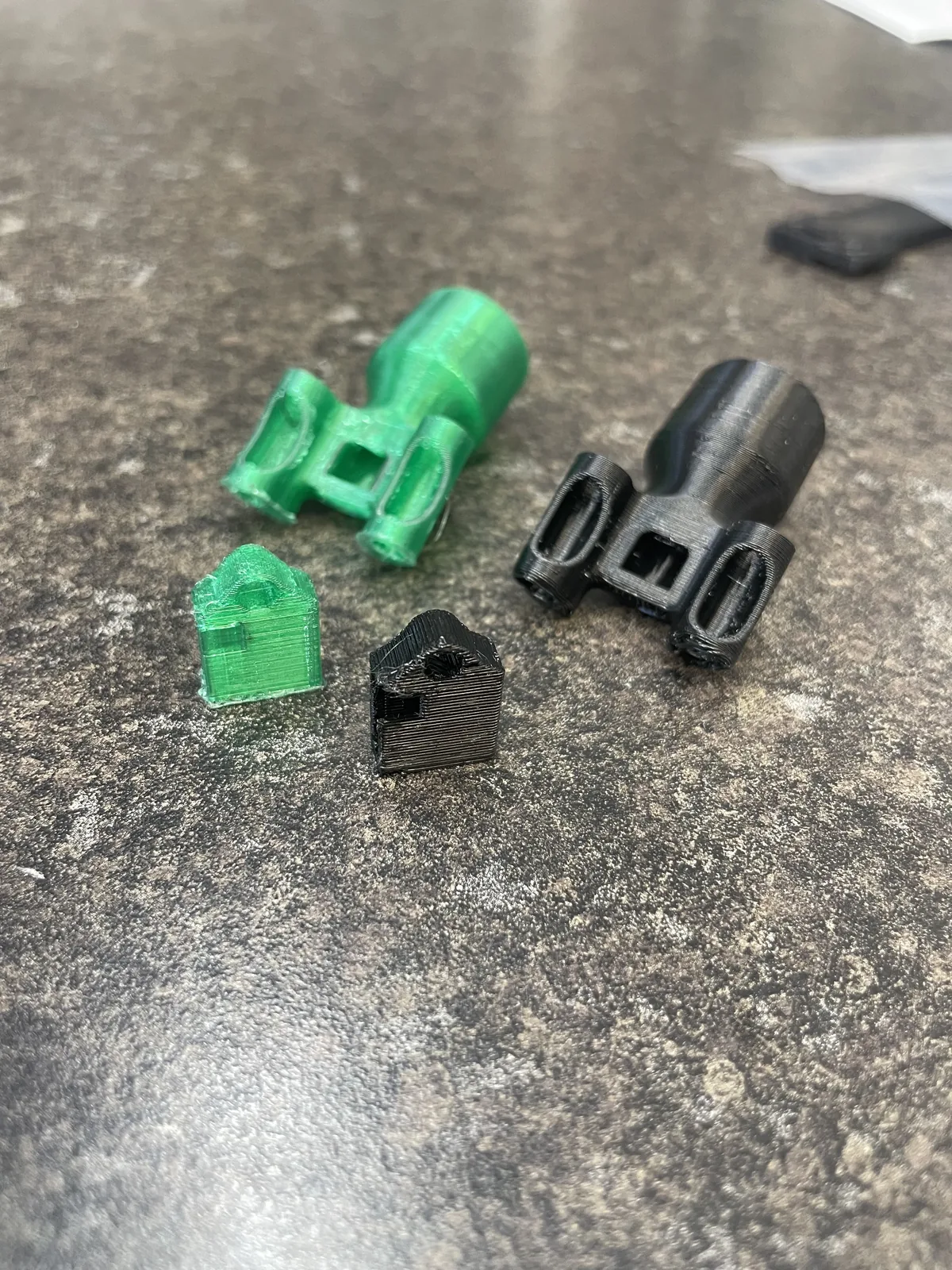
Discontinued spares
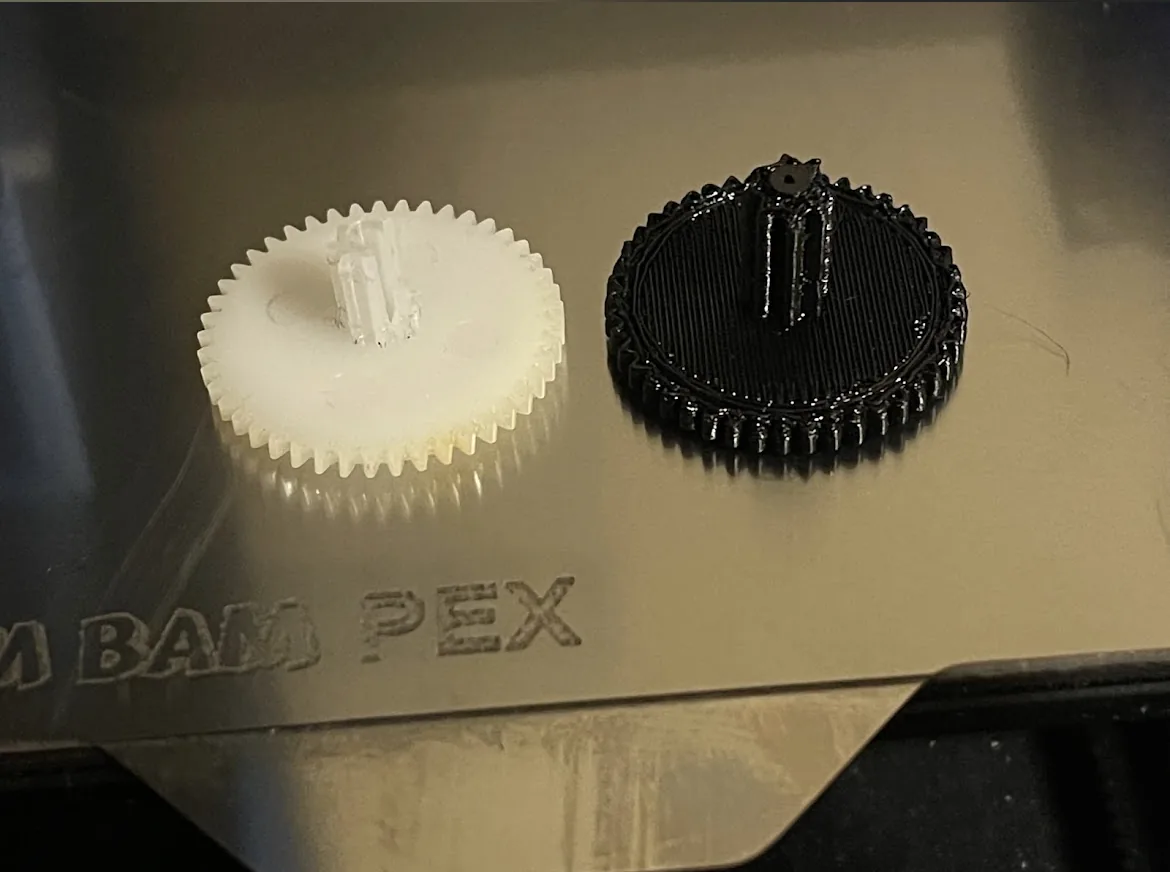
Knobs, covers, caps, sliders and gears for equipment that the maker no longer supports.
Fixtures and jigs
Holders that position work consistently: drilling guides, assembly aids, inspection gauges.
Brackets and mounts
Custom mounts for sensors, cameras, displays, cables and tools, sized to the real hardware.
Enclosures and covers
Housings for electronics, dust covers, guards, and protective caps.
Prototypes
Fit and function samples before committing to tooling, with quick revisions between rounds.
Small production runs
Repeat batches of the same part, with print settings locked after the first approved piece.
How a part is recreated from nothing
When no drawing exists, the part is rebuilt from the physical object. If you can send the broken part, or even a good one, the key dimensions are measured with calipers and the geometry is modelled parametrically. Hole spacing, wall thickness, mating faces and fit features are noted. Where a surface is organic or worn, photos and tracing help. The first print is fitted to the machine it will live in, and the model is adjusted until the fit is right. Once approved, the model is saved so reorders are fast and consistent, if you agree to the file being retained.
If the broken part is too damaged to measure, information about the machine, location and function is often enough to design a replacement, although more guesswork is involved, and a test print is wise. Photos with a ruler or coin in frame are very helpful. The webcam mount case study shows the measure, model, print and refine loop in detail on a real object.
Matching material to the environment
A plastic that works on a desk may fail in a van or on a loading dock. Choosing the material is the single biggest step in making a part last.
| Environment | Common choice | Reason |
|---|---|---|
| Indoor, light duty | PLA | Accurate, stiff and economical for fixtures and covers that stay at room temperature. |
| Workshops, knocks and chemical splashes | PETG | Tougher than PLA with better chemical and heat resistance. |
| Warm equipment or under hoods | ABS or ASA | Higher heat tolerance and good strength. |
| Outdoors and sunlight | ASA | UV and weather resistance keeps colour and strength over time. |
| Seals, feet and vibration isolation | TPU | Rubber-like flex, abrasion resistance and grip. |
The properties of each plastic are explained in more detail on the FDM printing services page. If the part has a safety, food-contact, electrical or medical role, say so up front. FDM parts are not certified components, and some applications need a different process or a certified supplier. Jose will tell you where FDM is appropriate and where it is not.
Strength, orientation and design for printing
FDM parts are not isotropic. They are strongest along the printed lines and weaker between layers, so how a part sits on the bed decides how it fails. For a bracket that is pulled sideways, the layers are arranged so the load follows them. For a clip that flexes, the bending direction is chosen to avoid splitting layers. Features such as fillets at stress points, thicker walls around bolt holes, and heat-set threaded inserts in place of printed threads make a major difference to durability.
If a part has failed before, the failure mode is a gift: where it cracked tells you where it needs reinforcement. Share photos of the failure, and the replacement can be designed to avoid it rather than simply copy it.
Tolerances, fits and inspection
Parts are printed to tolerances realistic for FDM, usually within a few tenths of a millimetre, with extra clearance planned wherever parts mate. For critical dimensions, a test print of the fit area and an inspection with calipers are standard. Inspection results can be shared on request. If you need a tolerance tighter than FDM can reliably give, such as precision bearing fits, drilled or reamed finishes can be added after printing, or you may be steered toward a machining shop.
Prototyping and pre-production runs
Printing is a fast way to test an idea before paying for moulds or tooling. A first print reveals interference, awkward assembly and ergonomic problems that are invisible on screen. Revised models are printed within the same shop, so iteration is quick. Once the design is stable, a pre-production run of dozens of units can be printed, with settings frozen so every unit matches. If a design grows beyond the practical scale of FDM, the prototypes still give you a validated reference to hand to a moulding supplier.
Confidentiality and file handling
Business parts often involve proprietary equipment. Files, drawings and photos you send are used only for your job, and not published or shared. If a part is printed for you, you decide whether the model is deleted afterwards or retained for easy reordering. Photos of finished work are never posted without your permission. Where you need a written confidentiality agreement, raise it before sending sensitive files.
Working with a home-based shop
A home-based shop has fewer fixed costs, which keeps small jobs affordable, and it has no corporate layers between you and the person doing the work. It also has limits: there is no showroom, capacity is finite, and rush jobs depend on the printers' current queue. Being upfront about deadlines helps. Jose will confirm what is realistic before accepting the job. Payment, pickup or delivery and any invoicing needs are agreed in the quote, and details are covered on the how it works page.
Printer repair for companies that print in-house
Some businesses own their own FDM printers for prototypes and tooling and need them to run reliably. The shop's printer repair service covers clogs, bed leveling, belts, hot ends and firmware tuning, and can complement parts work by keeping your own machines productive.
Request a quote
To start, send a short description of the part, how it is used, the environment it lives in, a photo of the original with a ruler for scale, and the quantity and date you need. Use the contact page. The quality guarantee explains how Jose stands behind every job.