About Jose and the shop
Corsair Custom 3D is one person, a few well-kept printers and a stubborn habit of fixing problems properly.
One person, start to finish
Corsair Custom 3D is run by Jose, who talks to customers, designs or adjusts the models, operates the printers, repairs other people's machines, inspects the work, and stands behind the result. In a business this small, that is a feature rather than a limitation. Nobody has to relay your request to somebody else, nobody forgets the detail you mentioned in the first email, and when something needs a judgement call there is no committee, only the person whose name is on the guarantee.
The shop is home-based, in Mississauga, ON, and serves surrounding areas, including much of the Greater Toronto Area. That setup keeps overhead low, which keeps small jobs affordable, and it means the printers are close at hand for the constant small adjustments that FDM printing needs.
Why FDM, and why only FDM
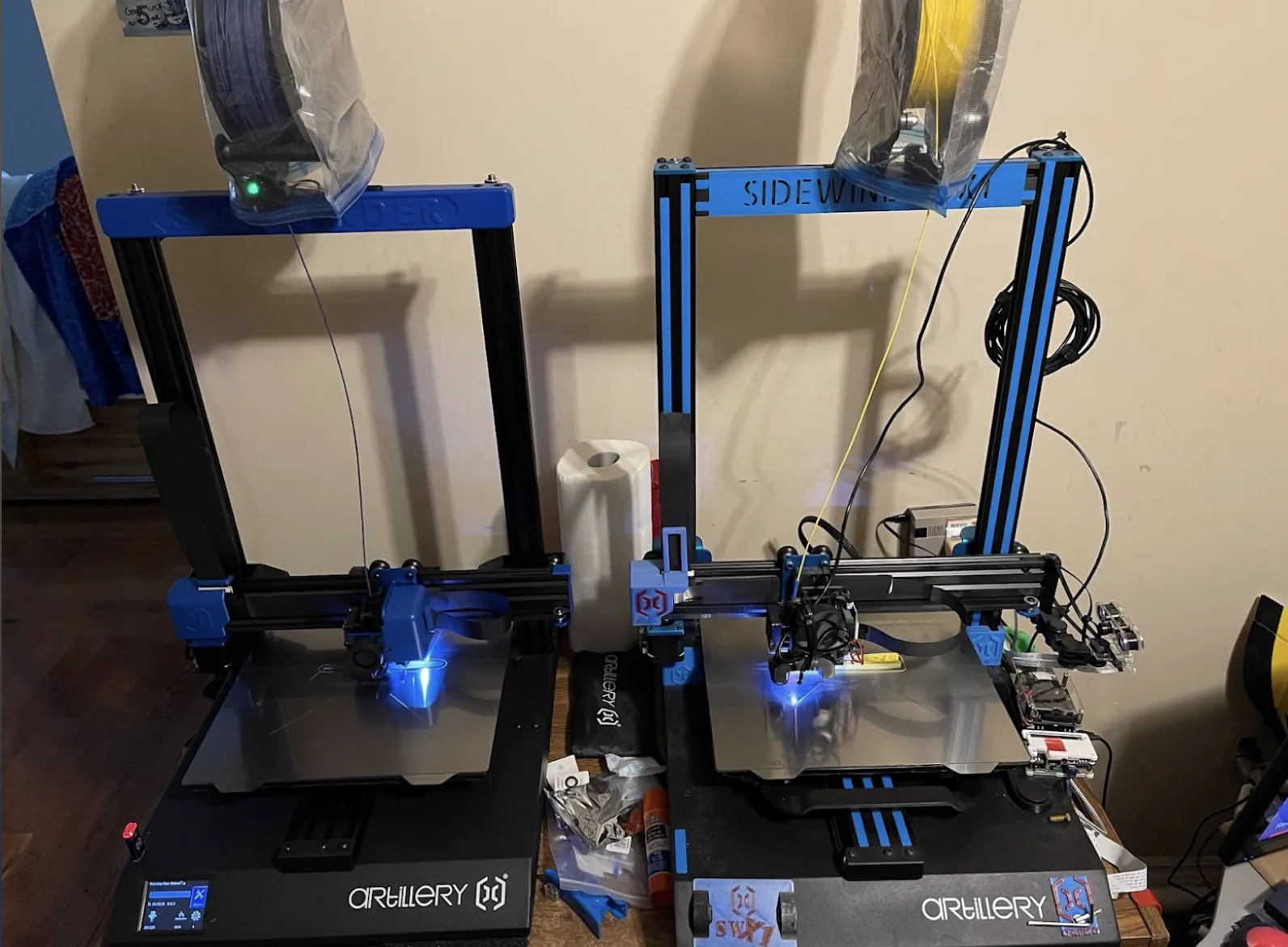
There are many ways to make a physical object from a digital model, and each has a personality. The shop chose to specialise in FDM because the process is practical, durable and flexible. A good FDM part can be a working bracket, a protective cover, a custom mount, a gear or an aircraft fin. By concentrating on one process, the shop develops deeper knowledge: how each plastic behaves, how orientation controls strength, how clearances should be set, and how to recognise from a failed print exactly which setting went wrong. That depth is what lets the work be guaranteed.
A hobbyist's eye for R/C
A large share of the printing here involves R/C planes and jets. Model aircraft are demanding customers: they reward low weight, accurate shapes and strong joints, and they punish sloppy prints at the worst possible moment. Working on aircraft has built habits that benefit every other job, such as designing hollow, ribbed structures, orienting layers to match load paths, and thinking about weight and balance. It is also the work that produces the most satisfying photos. See what has been built on the R/C planes and jets page and in the gallery.
Printer repair grew from daily use
Anyone who runs printers every day becomes a repair person, because machines fail in useful and educational ways. Clogged hot ends, drifting beds, tired belts and firmware quirks all end up on the workbench. The shop's repair service shares that experience with other owners who are tired of fighting their machines. Both the fixes and the tuning, including configuration of Klipper firmware, are covered on the printer repair page.
How Jose approaches a job
- Understand the purpose first. What the part does and where it lives drives every choice, from material to wall thickness.
- Be honest about fit. If FDM is not the right process, or a design is likely to fail, the answer is stated before anything is printed.
- Measure and test. Calipers and test prints beat assumptions. The webcam mount case study shows this approach across three versions of one design.
- Use tools sensibly. Parametric modelling and AI assistance speed up design work, but the physical part and the measuring tools make the final call.
- Stand behind the result. If something is wrong, it gets fixed. The quality guarantee describes how.
What to expect when you write
Expect a human reply with clear questions or a plan, not an automated quote. Expect honesty about what FDM can and cannot do. Expect the quote to be fixed before work begins, and the finished item to be checked before it leaves the shop. If a job needs to be kept confidential, say so, and it will be. The step-by-step flow is explained on the how it works page.
Who the shop works with
Customers include hobbyists and model-aircraft builders who need parts, owners of FDM printers who need repairs or tuning, and companies that need custom or replacement parts that cannot be bought. There is no minimum order and no job too small to be worth doing properly. Companies can read more on the business parts page.
Small shop, honest limits
A home-based shop has real limits: capacity is finite, there is no storefront, and a rush job has to fit around the current queue. It cannot offer certified aerospace or medical parts, and it works only with FDM. Being clear about these limits up front is part of the service. Where a project falls outside what the shop can do well, Jose will say so and, where possible, point you in a better direction.
Say hello
Whether you have a broken part, a stubborn printer or a plane that needs a new nose, the best first step is a short email. Details and a checklist for what to include are on the contact page, and answers to common questions are in the FAQ.